In today’s digital world, cyberattacks are no longer rare events. Businesses of all sizes—startups, SMEs, and large enterprises—face constant threats such as ransomware, phishing, insider attacks, and data leaks. Firewalls, antivirus software, and cloud security tools are important, but they are not enough on their own. Most data breaches happen not because of missing tools, but because of weak processes, poor governance, and human errors.
This is where ISO 27001 Certification Services play a crucial role. ISO 27001 is an internationally recognized standard for information security management. It helps organizations identify cyber risks, protect sensitive data, and reduce the chances of data breaches in a structured and repeatable way.
In this blog, we will explain in simple English how ISO 27001 Certification Services reduce cyber risk and data breaches, and why they are becoming essential for modern businesses.
Understanding Cyber Risk in Modern Businesses
Cyber risk refers to the possibility of loss or damage caused by a cyber incident. This includes data theft, system downtime, financial loss, regulatory penalties, and damage to brand reputation.
Today’s businesses operate in a highly connected environment. Data is stored in cloud platforms, accessed by remote employees, shared with vendors, and processed through APIs and third-party tools. While this improves efficiency, it also increases exposure to cyber threats.
Common reasons cyber risks are increasing:
- Remote and hybrid work environments
- Cloud and SaaS adoption
- Third-party vendors and outsourcing
- Lack of security awareness among employees
- Poor access control and data handling practices
Most organizations focus heavily on technology but ignore processes and people. This gap is exactly what attackers exploit.
What Are ISO 27001 Certification Services?
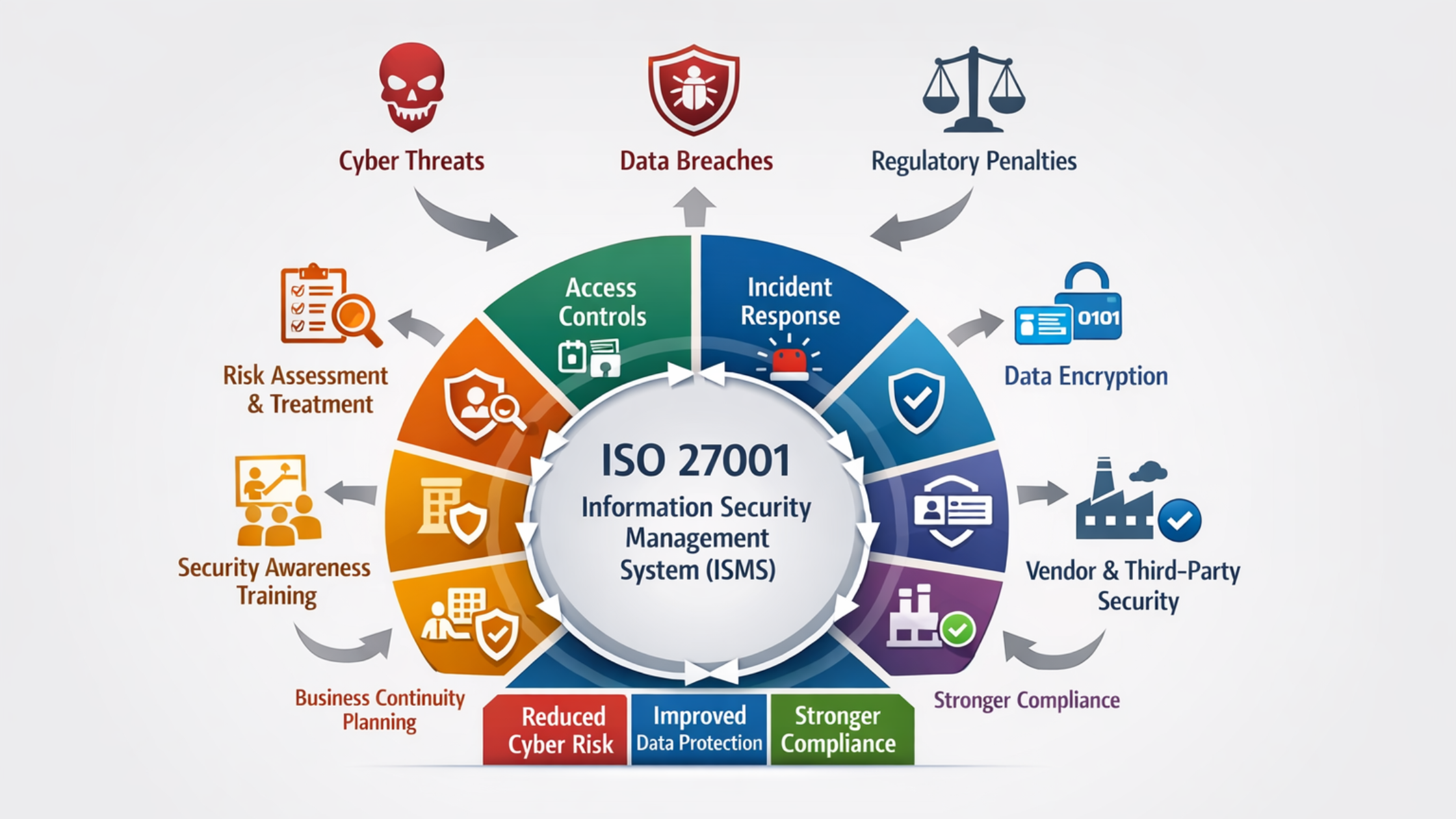
ISO 27001 Certification Services help organizations design, implement, and maintain an Information Security Management System (ISMS) based on the ISO 27001 standard. An ISMS is a structured framework that manages information security risks in a systematic way.
These services are usually provided by experienced consultants who guide businesses through:
- Understanding ISO 27001 requirements
- Identifying information assets
- Performing risk assessments
- Implementing security controls
- Preparing for certification audits
ISO 27001 is not just about passing an audit. It is about building a long-term security culture that continuously reduces cyber risks.
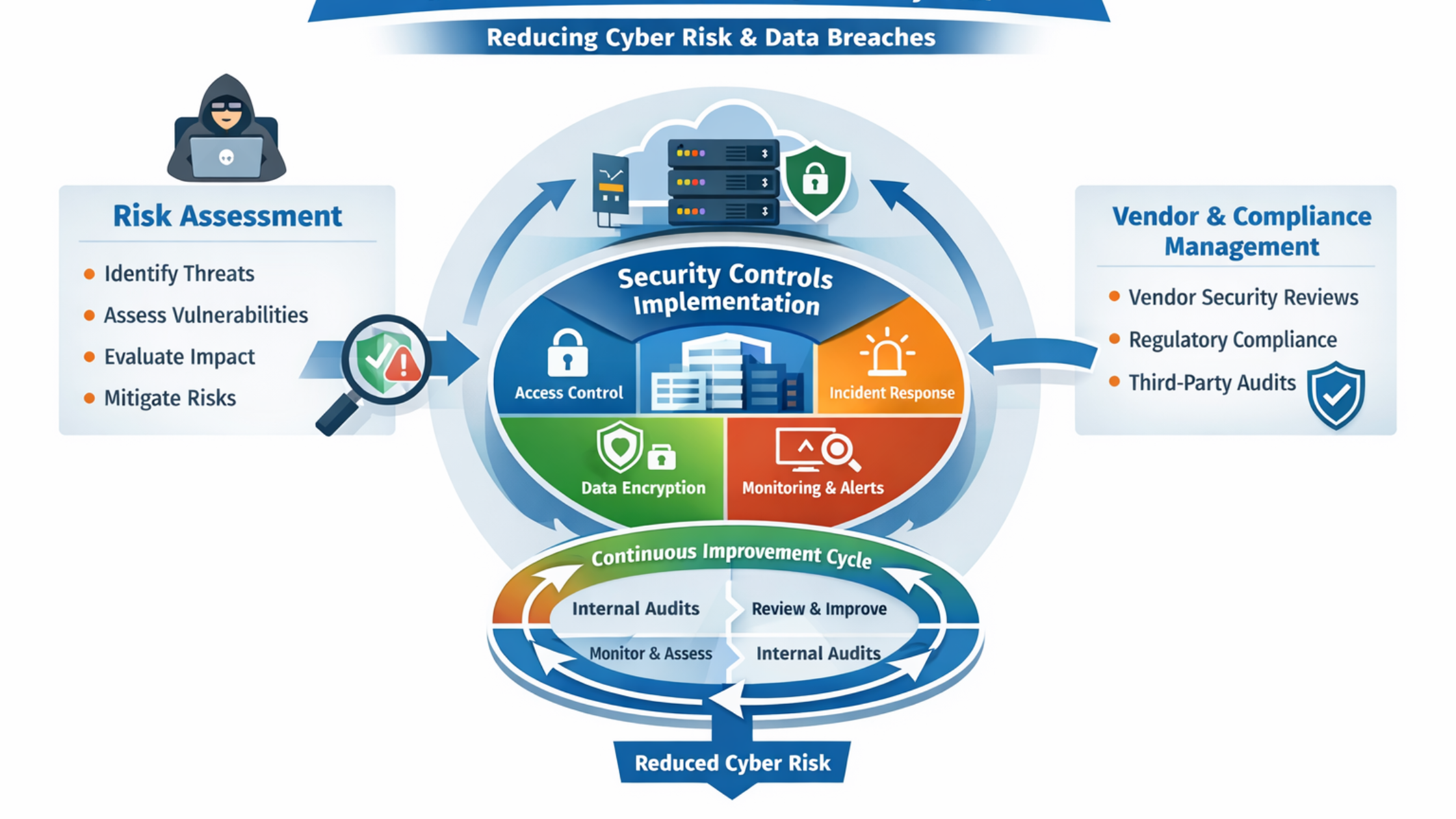
The Role of Risk Assessment in Reducing Cyber Risk
Risk assessment is the foundation of ISO 27001. Without understanding risks, security controls become random and ineffective.
ISO 27001 Certification Services help organizations perform a formal and structured risk assessment. This process identifies what can go wrong, how likely it is, and what impact it may have on the business.
Through risk assessment, organizations gain clarity on:
- Which data is most sensitive
- Where data is stored and accessed
- Who has access to critical systems
- What threats can exploit vulnerabilities
Key risks commonly identified:
- Weak password practices
- Excessive user privileges
- Unsecured cloud storage
- Lack of backup and recovery plans
- Unmonitored third-party access
Once risks are identified, ISO 27001 requires businesses to treat them using appropriate controls, rather than ignoring them.
How ISO 27001 Controls Prevent Data Breaches
ISO 27001 includes a comprehensive set of security controls (Annex A) designed to protect information across people, processes, and technology. These controls directly reduce the likelihood of data breaches.
Access Control and Identity Management
One of the biggest causes of data breaches is unauthorized access. ISO 27001 ensures that access is granted strictly on a need-to-know basis.
How this reduces risk:
- Employees access only what they need
- Privileged accounts are monitored
- Access is removed when employees leave
- Multi-factor authentication is encouraged
This prevents attackers from moving freely within systems, even if credentials are compromised.
Data Protection and Encryption
Data breaches often involve stolen or exposed data. ISO 27001 Certification Services help organizations implement strong data protection practices.
These include:
- Encryption of sensitive data at rest and in transit
- Secure handling of backups
- Proper disposal of data and hardware
Even if attackers gain access to systems, encrypted data remains unreadable, significantly reducing the impact of a breach.
Logging, Monitoring, and Detection
Many organizations detect breaches months after they happen. ISO 27001 emphasizes logging and monitoring to identify suspicious activity early.
Benefits include:
- Early detection of unusual access
- Faster response to incidents
- Evidence for investigations and audits
Early detection reduces the time attackers stay in systems, limiting damage.
Reducing Human Error Through ISO 27001 Certification Services
Human error is one of the leading causes of cyber incidents. Employees may click on phishing links, reuse passwords, or mishandle sensitive data.
ISO 27001 Certification Services address this risk by focusing on people, not just technology.
Key areas include:
- Security awareness training
- Clear roles and responsibilities
- Defined procedures for data handling
When employees understand their responsibilities, they become the first line of defense instead of the weakest link.
Incident Response: Limiting Damage When Breaches Occur
No organization can guarantee that breaches will never happen. What matters is how quickly and effectively they respond.
ISO 27001 requires organizations to have a documented incident response process. This ensures that everyone knows what to do during a security incident.
Benefits of structured incident response:
- Faster containment of attacks
- Reduced downtime
- Lower financial and legal impact
- Better communication with stakeholders
Organizations with ISO 27001 Certification Services recover faster from incidents than those without a plan.
Business Continuity and Disaster Recovery Planning
Cyber incidents often lead to service outages and data loss. ISO 27001 integrates business continuity and disaster recovery planning into information security.
This includes:
- Regular backups
- Tested recovery procedures
- Defined recovery time objectives
As a result, even severe incidents do not completely disrupt business operations.
Managing Third-Party and Vendor Risks
Many data breaches originate from third-party vendors. ISO 27001 Certification Services help organizations control this growing risk.
Vendor risk management includes:
- Assessing vendor security practices
- Defining security requirements in contracts
- Monitoring third-party access
This reduces the chance that weak vendors become an entry point for attackers.
Continuous Improvement: Why ISO 27001 Works Long-Term
One of the biggest strengths of ISO 27001 is its focus on continuous improvement. Cyber threats evolve constantly, and security controls must evolve too.
ISO 27001 ensures:
- Regular internal audits
- Management reviews
- Ongoing risk assessments
This keeps the organization’s security posture aligned with changing threats, technologies, and business needs.
How ISO 27001 Certification Services Improve Compliance
ISO 27001 aligns well with many regulatory and legal requirements. While it is not a law, it supports compliance with:
- GDPR
- India’s DPDP Act
- HIPAA
- PCI DSS
By implementing ISO 27001, organizations automatically strengthen their compliance posture and reduce the risk of regulatory penalties.
Business Benefits Beyond Cybersecurity
ISO 27001 Certification Services provide benefits that go beyond security.
These include:
- Increased customer trust
- Stronger brand reputation
- Easier vendor and partner onboarding
- Competitive advantage in sales
Many customers now demand proof of security before sharing data. ISO 27001 certification provides that assurance.
Why Professional ISO 27001 Certification Services Matter
Some organizations try to implement ISO 27001 on their own and struggle with complexity, documentation, and audits. Professional certification services simplify the journey.
Benefits of expert support:
- Faster implementation
- Reduced audit failures
- Practical, business-aligned controls
- Less burden on internal teams
Consultants ensure that ISO 27001 is implemented in a way that actually reduces cyber risk, not just creates paperwork.
Common Mistakes That Lead to Data Breaches (and How ISO 27001 Prevents Them)
Organizations without structured security frameworks often make similar mistakes:
- No clear ownership of security
- Incomplete risk assessments
- Poor documentation
- Ignoring insider threats
ISO 27001 Certification Services address these issues systematically, closing gaps before attackers exploit them.
Who Should Consider ISO 27001 Certification Services?
ISO 27001 is valuable for:
- IT and software companies
- Cloud and SaaS providers
- Healthcare organizations
- Financial services
- E-commerce businesses
Any organization handling sensitive or customer data can benefit from ISO 27001.
The Future of Cybersecurity and ISO 27001
As cyber threats become more advanced, businesses need structured, risk-based security approaches. ISO 27001 continues to evolve and remains relevant even in modern environments like cloud, DevOps, and remote work.
Organizations that adopt ISO 27001 today are better prepared for tomorrow’s threats.
Conclusion
Cyber risk and data breaches are business risks, not just IT problems. Relying only on security tools is no longer enough. Organizations need strong processes, clear accountability, and a culture of security.
ISO 27001 Certification Services provide a proven, structured approach to reducing cyber risk and preventing data breaches. By focusing on risk assessment, security controls, people, and continuous improvement, ISO 27001 helps organizations protect their data, reputation, and future.
In a world where trust is everything, ISO 27001 is not just a certification—it is a commitment to security.